
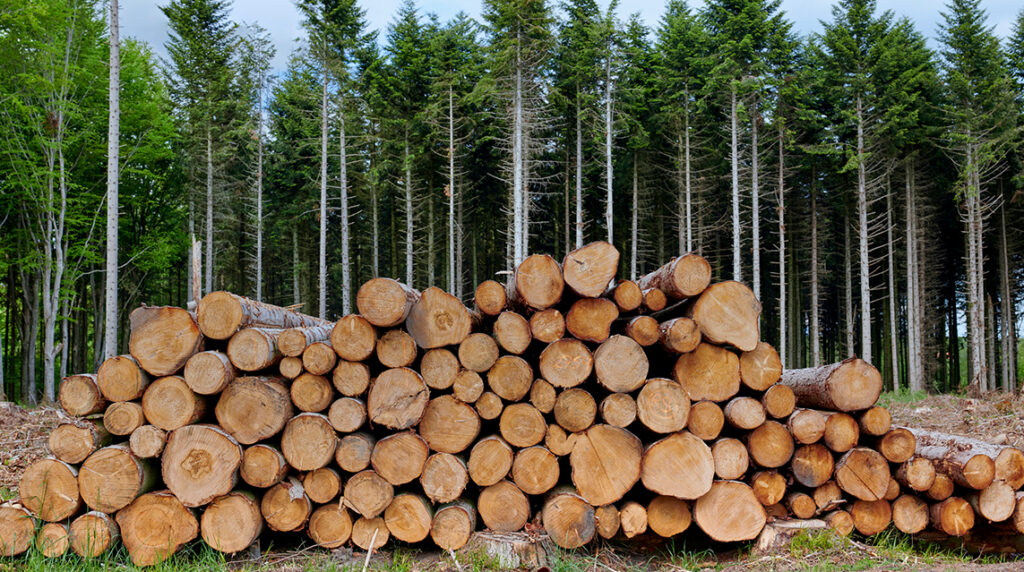

When people think of global water security, they think of rainfall, dams, and aging infrastructure. However, worldwide, deforestation and forest degradation pose significant vulnerabilities, leading to global water insecurity that we all need to know. It means limited water availability, quality, and reliability.
Forest restoration is increasingly viewed as a core solution to water insecurity. For instance, by repairing damaged watersheds and restoring natural water cycles, communities can mitigate potential water insecurity. Ensuring forests do their thing and grow supports access to quality water for global communities, which we’ll explore in greater detail below.
How Deforestation and Forest Degradation Disrupt Water Systems
Tree canopies, roots, and forests are part of the global hydrological cycle. For example, the tree canopies protect from rainfall, roots anchor soil, and forests absorb and store water. They slow the water runoff so it enters rivers and aquifers gradually. As a result, it’s essential to ensure that communities slow deforestation and forest degradation to help them thrive.
Think of living in communities, including in the U.S., where forests are cleared or degraded. These activities accelerate soil runoffs during rainfalls. It increases erosion and sedimentation, which sends soil into water sources. In turn, it could make flooding more intense during storms because degraded watersheds lose their ability to regulate water.
What Is the Link Between Deforestation and Water Scarcity?
Deforestation and forest degradation increase fractures. It happens because the natural water cycles are disrupted. As forests degrade, rainfall runs off quickly rather than infiltrating the soil. In turn, it reduces groundwater recharge and increases the chances of catastrophe by destabilizing water flows during dry periods or heavy rain seasons.
Forests as the Foundation of Water Security
There’s a path through forests to ensure global water security. Forests serve as watersheds because they play a critical role in managing water quantity and quality. In other words, they help filter water, as mentioned, regulate water flows, stabilize slopes, and prevent erosion that can have a profound negative impact on global communities.
When forests are healthy, they not only help communities with water security, but they are also essential for agriculture. Farmers depend on consistent water supplies and are adversely affected by extreme water conditions. Agriculture can’t afford unreliable water, as dry soil, for example, stresses crops and makes them more vulnerable.
Why Are Forests Important for Watershed Sustainability?
Reforestation water benefits are critical to understand because countries worldwide, and all communities, need to regulate water flow and protect water quality. Forests slow water runoffs and erosion, and improve soil infiltration. Moreover, they critically sustain essential river flows, especially during dry seasons.
Unlike engineered water infrastructure, restored forests offer several benefits at once. For one, they may cost much less than engineered solutions for water security. They also support natural biodiversity and soil health, and help communities better position themselves against the challenges of extreme weather and climate change.
How Does Forest Restoration Improve Water Security?
As is clear, forest restoration strengthens water security. It rebuilds how water moves through a landscape, creates healthy forests, slows runoff, protects soils, and allows water to soak into the ground. All of it improves water quality and replenishes aquifers. Over time, it creates consistent river flows and more dependable water supplies.
Degraded vs. Restored Watersheds: Key Differences
This comparison chart highlights why forest restoration is viewed as essential to water security and not just for environmental conservation.
| Degraded Watershed | Restored Forested Watershed |
| Rapid surface runoff | Improved water infiltration |
| High erosion and sediment | Stabilized soils and slopes |
| Polluted waterways | Cleaner rivers and reservoirs |
| Flood-drought extremes | More stable stream flows |
| Poor groundwater recharge | Improved aquifer replenishment |
Forest Restoration and Water Security in Haiti
Unfortunately for Haiti and its communities, the nation is one of the most deforested countries in the Western Hemisphere. Its widespread forest loss has severely degraded watersheds, and that’s contributed to erosion, flooding, and declining agricultural production. Reforestation projects have improved erosion control and seasonal water availability.
How Does Reforestation Help Water Access in Haiti?
As of this writing, Sneakers4Good, through its Green Sneakers program and partnership with veritree, has supported the planting of over 5,000 trees! In other words, the sneakers collected and given to prevent deforestation and forest degradation have been transformed into critical opportunities for agroforestry.
Mangrove Restoration and Water Systems in Kenya
In coastal Kenya, mangrove forests play a critical role in protecting freshwater systems. Mangroves filter pollution, stabilize shorelines, and reduce saltwater intrusion into freshwater sources used for drinking and irrigation. Again, through our sneaker collection program and partnership with veritree, partners have supported Kenyan communities.
Why Are Mangroves Important for Water Security?
Mangroves are essential for water security. They serve as a natural barrier between the land and sea. The density of their root systems helps trap sediment and pollutants, and it limits saltwater from entering freshwater sources. In other words, mangroves are vital for safeguarding water supplies for communities and agriculture.
Forest Restoration as Climate Adaptation for Water Security
Climate change is only intensifying pressure on water systems. As we know from experience, rainfall patterns are shifting, droughts are longer, and extreme weather events are more frequent. As a result, reforestation serves as a buffer against extremes, making it a critical aspect of environmental and human survival moving forward.
Is Forest Restoration a Climate Adaptation Strategy?
The short answer is, yes. Forest restoration is a proven climate adaptation strategy for water security. It reduces flood risk, improves drought resilience, and stabilizes water systems.
Moving Beyond Deforestation Toward Water-Resilient Landscapes
In sum, paying attention to and addressing deforestation and forest degradation isn’t an option. All communities need to focus on forest restoration, which offers a practical path toward water security. From Haiti to Kenya and all around the world, it’s essential to restore the forests to protect fragile water systems. You can do your part by responsibly turning your sneakers into trees with Green Sneakers.
© 2026 Green Sneakers. All Rights Reserved.