
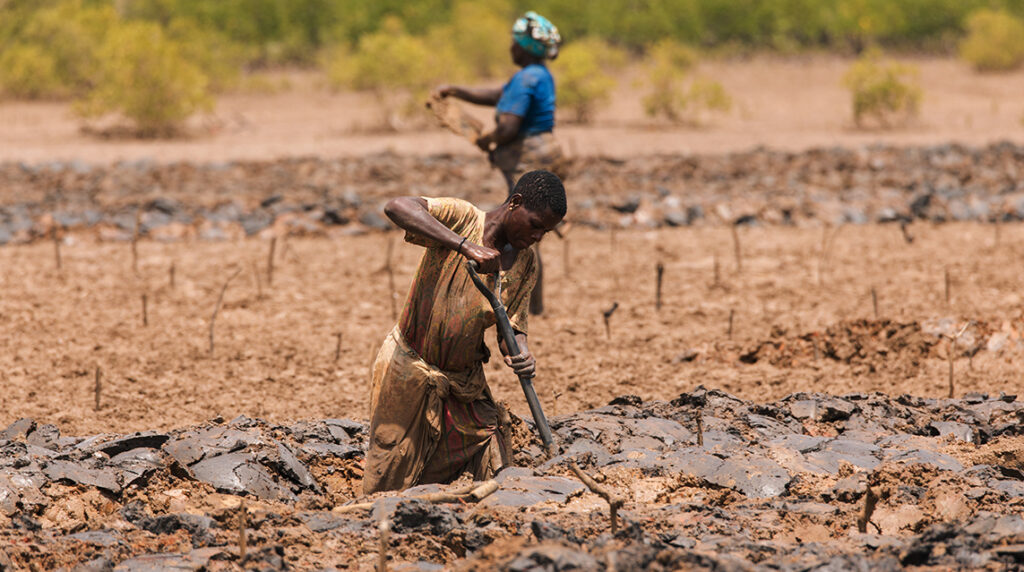

When you contribute your sneakers, you can support a mangrove forest, and pitch in to help sustain our planet. You see, when your gym, sports club, or retailer chooses to collect sneakers in your community, you have a choice. You can plant trees in countries like Kenya. Or you can earn funds for your organization or community. The choice is yours.
What Is a Mangrove Forest, Really?
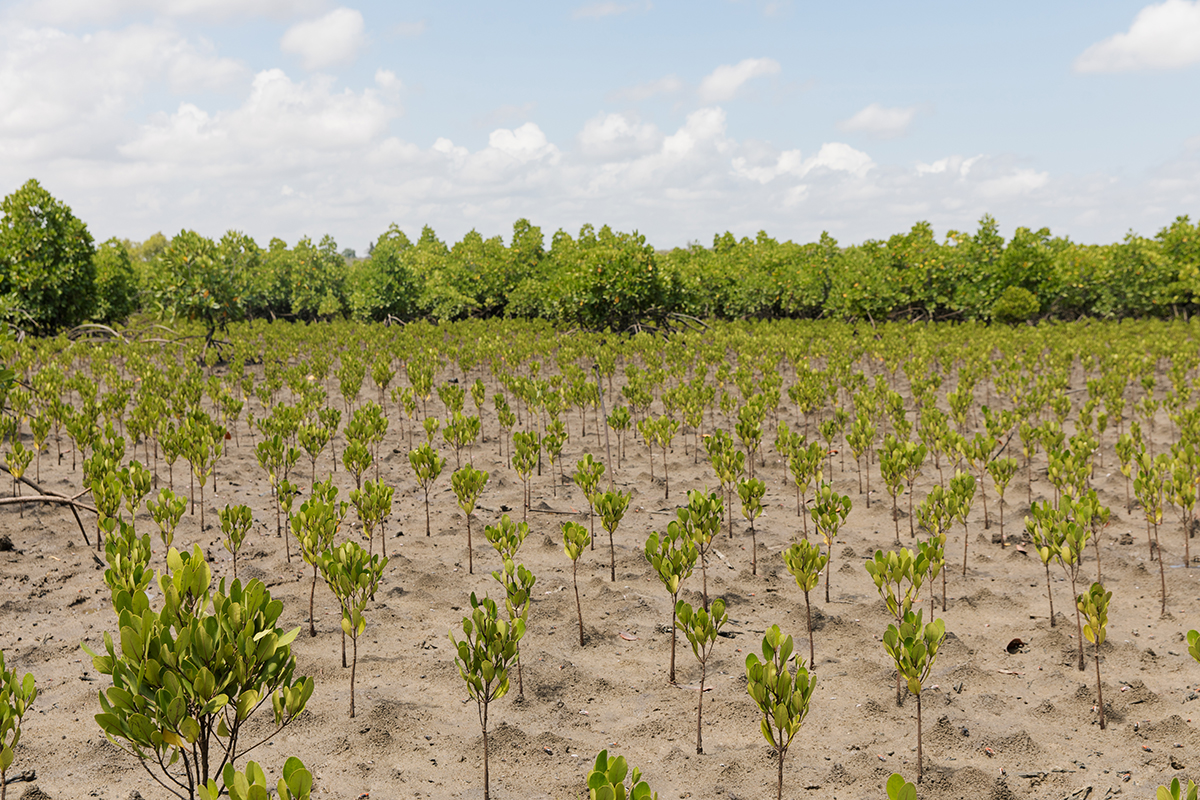
A mangrove forest is a beautiful thing to behold. It’s a place where trees grow in salty, swampy water. These forests are made of a variety of sturdy trees and shrubs that live in coastal or intertidal zones. You can find them in dozens and dozens of countries worldwide, including on the continent of Africa, Central and South America. Moreover, in places like Kenya, the forests provide life for entire communities of people who work as a result of their existence.
An Ecosystem That Does It All
The forests aren’t just fascinating for nature lovers. They do critically important work and contribute to local communities. For instance, they do some of the following.
- Mangrove forests protect coastlines from storm surges.
- They sequester and absorb carbon.
- The forests help filter pollutants in water and trap sediment.
- They provide economic sustainability to communities that plant and fish in the area.
Mangroves are nature’s climate solution, helping to contain climate change and support life on this planet. In other words, we all owe these forests a great deal, even if we don’t live close to them.
Life Among the Trees: Mangroves and People
Imagine a daughter and grandmother planting saplings weekly in Kenya. For these two women, the trees aren’t just trees. The women know that it’s a chance for them to make a living to feed the little ones back home. First, they are earning good wages from the work they do. And second, the mangroves attract fish, which helps feed the family.
Worldwide, over 120 million people rely on mangrove forests to live. And many of them are women. Women work to sustain their families by running nurseries, managing planting schedules, and engaging in eco-tourism, among other jobs, thanks to the direct and indirect support the mangroves provide in vulnerable communities. Social impact meets environmental restoration.
Climate Doers in Green
As much as any mangrove forest does for its local communities and the planet as a whole, there are challenges. Thankfully, we have the climate workers, as mentioned above, who work to plant and support the trees to reduce carbon emissions. By the way, it’s not just in the trunks and leaves that the trees store carbon. It’s also in the waterlogged soil.
There’s a lot to do, and Kenyan communities and others need to ensure the replanting and cultivation of mangroves. In Kenya, between 1985 and 2009, it lost 20% of its mangroves. Why? There simply wasn’t any mechanism in place to save them. It had devastating consequences. For instance, the scarcity of fish to catch devastated work and families’ food supply.
In 2016, the Kenyan government put into law the Forest Conservation and Management Act of 2016. The law protects mangroves and inland forests. More specifically, what that means is that cutting down mangrove trees is against the law throughout the entire country. And since then, Kenya has been moving to repopulate the trees.
How You Can Help Mangroves
Our team continually believes in creative solutions. You wouldn’t think that your sneakers would have anything to do with trees in Kenya—but they do. We’re thinking beyond the bin here, so follow for a moment. Around town, you may have seen recycling collection bins for your sneakers. So, now that you know more about mangroves, how about joining the movement?
We have an audacious goal to collect 1,000,000 shoes by 2030. Some people have said to our team it’s impossible. Perhaps. But our team focuses on the impossibility of what we see as possible, and others might not see it. You can choose to add to planting trees in countries like Kenya. Take a look at what you can help to do.
We don’t believe in greenwashing or feel-good marketing that has no basis in reality. That’s why we work with our veritree partner to ensure that everything is tracked. So, when you decide to gather sneakers, you join others in doing what some may think is impossible, and you choose to make it possible.
Not sure how you can help? Think again.
- Volunteer to be in nature and support pro-climate efforts.
- Get your community involved in collecting sneakers.
- Donate to organizations supporting communities.
- Shop sustainable brands, such as Patagonia, and also sneaker brands.
- Get informed. Knowledge is power. Share what you know on social or Substack.
In sum, mangroves can be messy in swamps and their tangled beauty. Still, they’re effect on our planet and lives is real, relevant, and impactful. They’re guardians of biodiversity. They are strong bulwarks against the effects of superstorms. And they provide work and a way to earn a living to millions around the world, including in Kenya. In short, we need them, even if we’re not near them. Saving the planet doesn’t require a cape—just sneakers.
© 2025 Green Sneakers. All Rights Reserved.