


After about 400 miles of running, there comes a time when your favorite running shoes don’t quite feel the same. You know the feeling. They’ve lost the bounce, or perhaps your knees are feeling a bit more of the shock. In short, you’re starting to wonder when to replace running shoes. That’s the right question, and in this article, we’ll give you the answers and share what to do with them besides throwing them in the trash! (Scroll to the bottom for that info!).
How Long Do Running Shoes Last?
Generally speaking, if you’re considering when to replace running shoes, it’s essential to know that they’re intended to last in top form for about 300 to 500 miles. Still, the answer to the question isn’t entirely straightforward. You may be someone who’s running serious distances. In that case, you may need to replace your unique sneakers every four to six months. But a weekend runner may have a longer time frame for sneaker replacement.
Still, it’s essential to remember that miles aren’t everything. Your weight, stride, the surfaces you run on, and even where you store your running shoes matter. All of these things can affect whether it’s time to replace your sneakers sustainably. Now that you know what could play a role in your decision, let’s explore five ways to know when to replace your sneakers responsibly.
5 Clear Signs When to Replace Running Shoes
1. The Sole Truth: Check the Tread on Your Sneakers
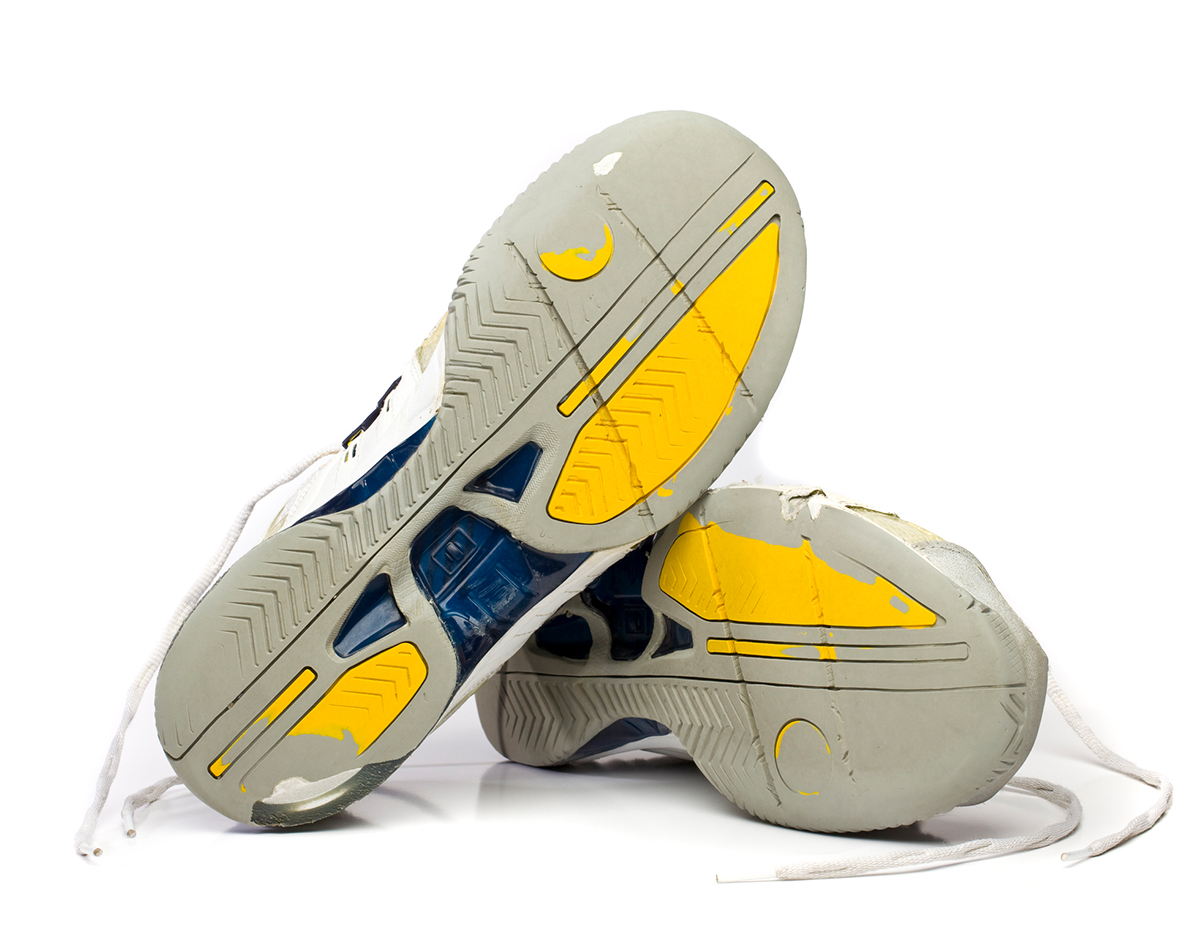
The first thing to do when you’re thinking about when to replace running shoes is to flip them over and take a look at the soles. If you see tread patterns that are worn smooth, especially at the ball of your foot or on the heels, it’s time. The fact is that even moderate tread wear reduces your traction and shock absorption. If you love the sneakers, start using them for everyday walking and extend their use.
2. The Squeeze Test: Midsole Compression for Your Running Shoes
A quick test is to squeeze the midsole, which is the cushy part between the upper and the outsole, with your thumb. Feel it and see if it bounces back quickly or if it feels flat. In other words, if it stays compressed or feels harder than it should, the cushion is breaking down. That means that if you use the running shoes on a run, your joints are going to start to feel the pounding of the pavement.
3. Listen to Your Body
Another test for your running shoes is your body. If, when you go out for a run, your knees, hips, or shins hurt, then the sneakers may be the cause. When you run in sneakers past their prime, your body has to work harder to compensate, defeating the purpose of quality sneakers. So, don’t ignore the signals. When your body is telling you something, it’s time to get yourself a fresh pair of sneakers.
4. The Wobble: Heel Counter Breakdown
When you’re looking at when to replace running shoes, press the heel counter. That’s the stiff back part of the back of the sneakers. Is it collapsing easily? If you can fold it down with little resistance, consider replacing the sneakers. If it folds easily, it provides less stability and support during your runs and can cause your ankle to roll inward or outward.
5. Upper Wear: More Than Just Cosmetic
Finally, take a look at the upper part of your sneakers. That’s the part of the running shoes that wraps around your foot. Look for minor scuffs or dirt. If there is, that’s normal, but if you see any of the following, it may be time to replace them for your running.
- Tears in the mesh
- Separated seams
- Holes near the toe box
- The upper material is pulling away from the sole
Plant Trees, Don’t Dump
Now that you know when to replace running shoes, it’s time to discuss how to do something good with them and not throw them in the trash. If you want to know the scoop, sneakers can take 30 to 40 years to decompose, or even an entire lifetime. That’s because there are dozens of parts that, stitched together, make up your favorite pairs of running shoes. So the question now is, what to do with them in a socially responsible manner?
Well, how about planning trees? Yes, through our partnership with veritree, your sneakers can support the environment and make an impact. Every pair of sneakers can be transformed into trees in East Africa through the very unique Green Sneakers program. The trees get planted in communities where they’re fighting climate change and need economic opportunities. So, every pair you contribute can make a positive difference.
Knowing when to replace running shoes isn’t just about the numbers. It’s about paying attention to how your sneakers and body feel and the signals they send. Just because it’s time to retire sneakers doesn’t mean they’re done. Now you also know that you can be the hero and have them become part of the reuse economy through unique programs that are socially responsible and support people and the environment worldwide.
© 2025 Green Sneakers. All Rights Reserved.